An Ofgem policy flaw could leave EV drivers paying £1 per kWh in 2027
SummaryReverse the Charge is a new impact assessment that puts real figures behind the effective ‘grid tax’ faced by EV charging networks in the UK.
The assessment has found that, as a result of inaction by Ofgem, EV owners, especially those without off-street parking, may soon be facing even higher costs for recharging publicly, and that there is little that the operators of EV chargers can do to prevent price rises.
As part of the development of Reverse the Charge, several Ofgem briefings have been obtained that show how long the regulator and Treasury have been aware of the problem and its impact.
Key Findings
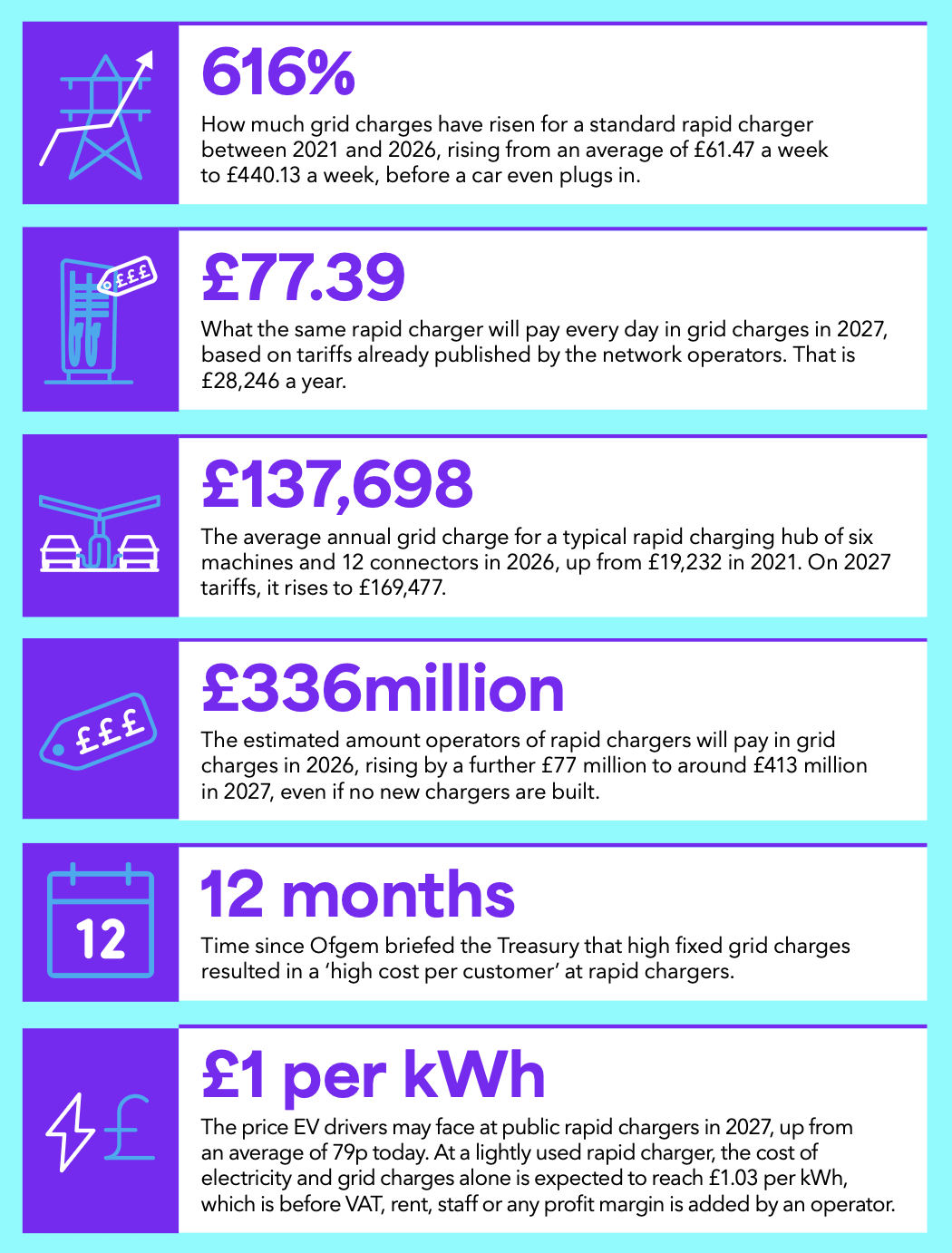
Figures are based on tariffs published by the UK’s Distribution Network Operators (DNOs) and the National Energy System Operator (NESO).
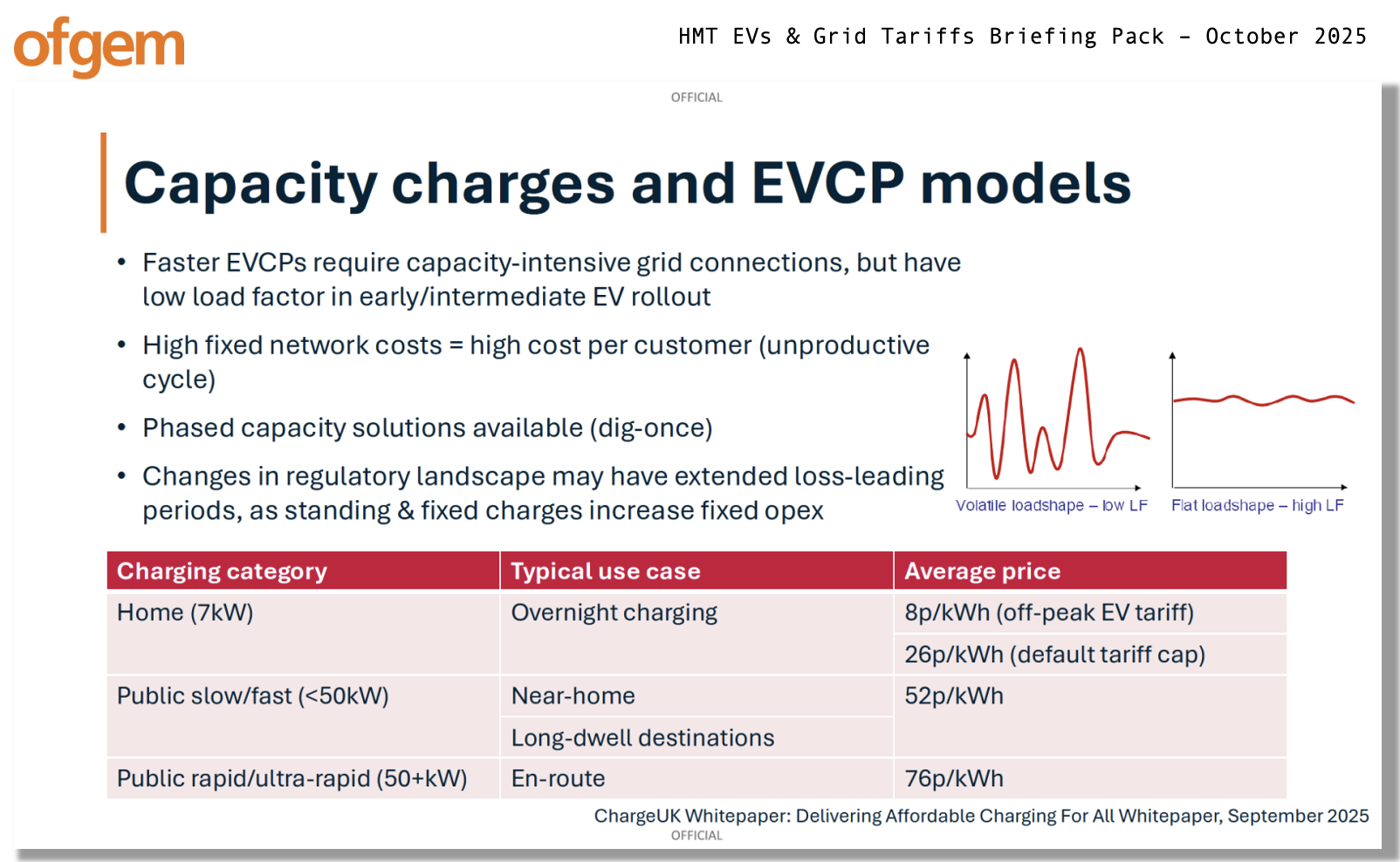
Reverse the Charge has obtained, under Freedom of Information, a series of Ofgem briefings. They show the regulator briefed HM Treasury a year ago that grid charges were creating an “unproductive cycle” for rapid chargers and set out rule changes that could address it.